
Phone: +86-133 5263 6504
Phone: +86-133 5263 6504
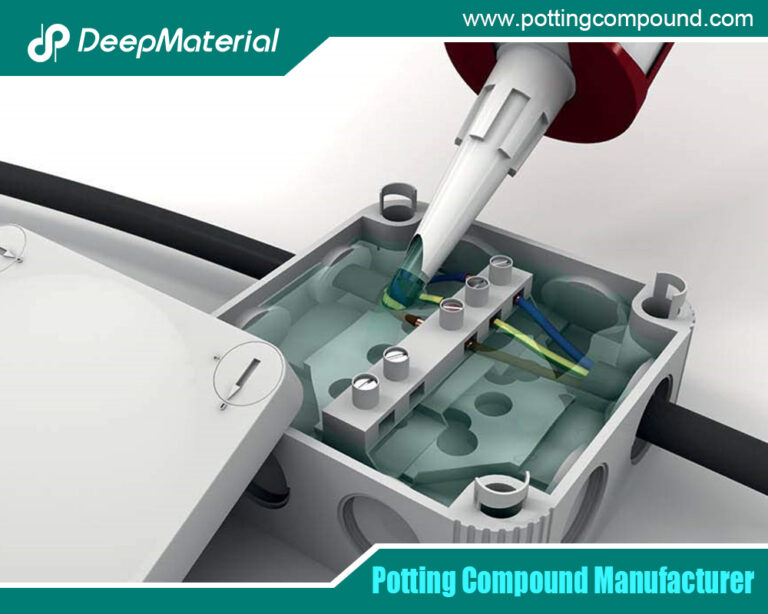
Conformal Coating vs. Potting: What’s the Difference for Your PCB?
In the world of electronics manufacturing, the longevity of a Printed Circuit Board (PCB) is often determined not just by the quality of its components, but by its ability to survive the environment in which it operates. From the humidity of a tropical climate to the constant vibration of an automotive engine bay, external threats can degrade performance and cause catastrophic failures.
To mitigate these risks, engineers turn to protective methods. Two of the most common strategies are Conformal Coating and Potting/Encapsulation. While both aim to shield electronics from environmental hazards, they are fundamentally different processes that offer distinct levels of protection, repairability, and thermal management.
Choosing the wrong method can lead to increased costs, field failures, or difficulties in warranty repairs. This article explores the technical differences between conformal coating and potting, helping you decide which solution is best for your specific application.
What is Conformal Coating?
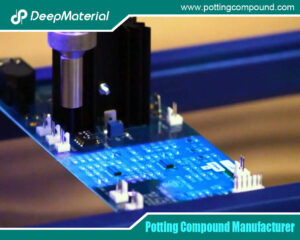
Conformal coating is a process where a thin, protective polymeric film (typically 25 to 250 micrometers thick) is applied to the surface of a populated PCB. The term “conformal” refers to the coating’s ability to “conform” to the contours of the board and its components, covering solder joints, component leads, and the board substrate.
The coating acts as a barrier against moisture, dust, chemicals, and extreme temperatures, preventing issues like electromigration and corrosion.
Common Types of Conformal Coating
-
Acrylic (AR): Easy to apply and remove (using solvents), making it ideal for rework. It offers good humidity resistance but poor abrasion resistance.
-
Silicone (SR): Excellent for high-temperature applications and provides superior flexibility, which is vital for boards subject to thermal cycling.
-
Polyurethane (UR): Offers excellent chemical and moisture resistance but is difficult to remove for repairs.
-
Epoxy (ER): Very hard and abrasion-resistant, but high stress on components during curing and difficult to rework.
-
Parylene (XY): Applied via chemical vapor deposition, it provides the most uniform and pinhole-free coating, though it is the most expensive option.
Application Methods
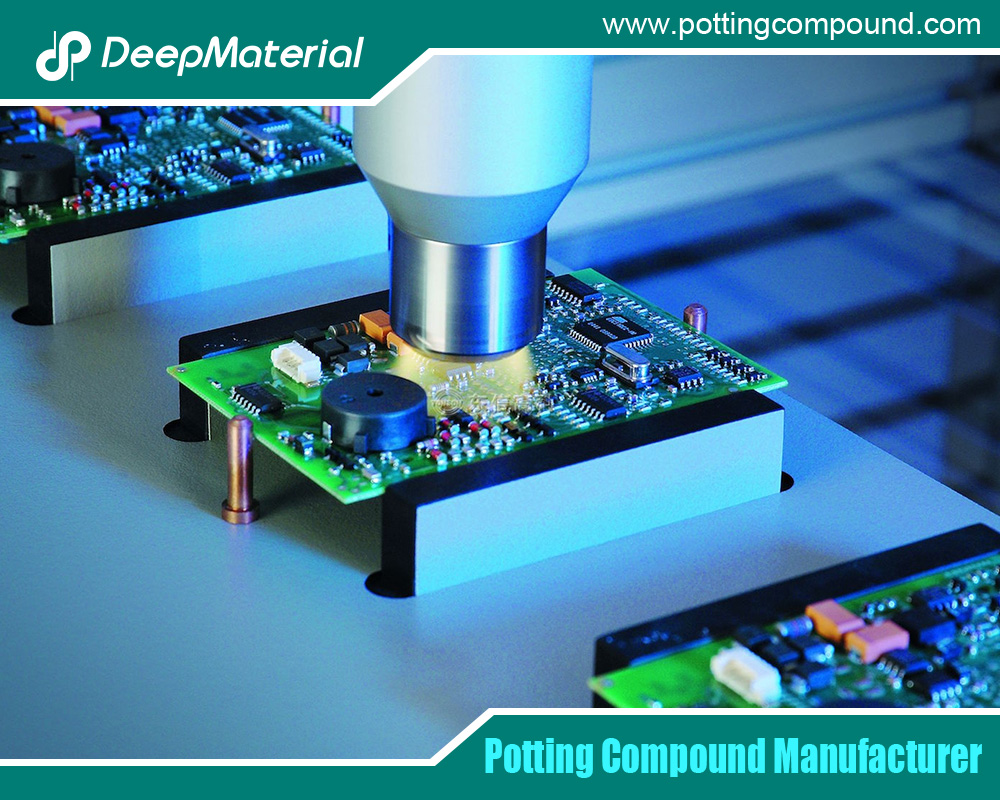
Conformal coatings can be applied manually via spray can, or automatically through selective robotic spraying, dipping, or (for Parylene) vacuum deposition.
What is Potting?
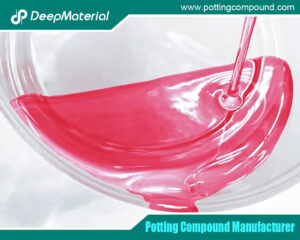
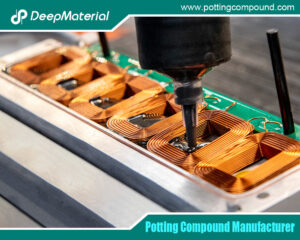
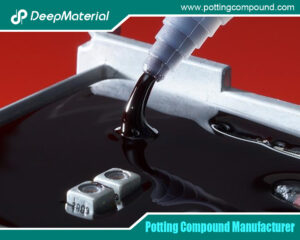
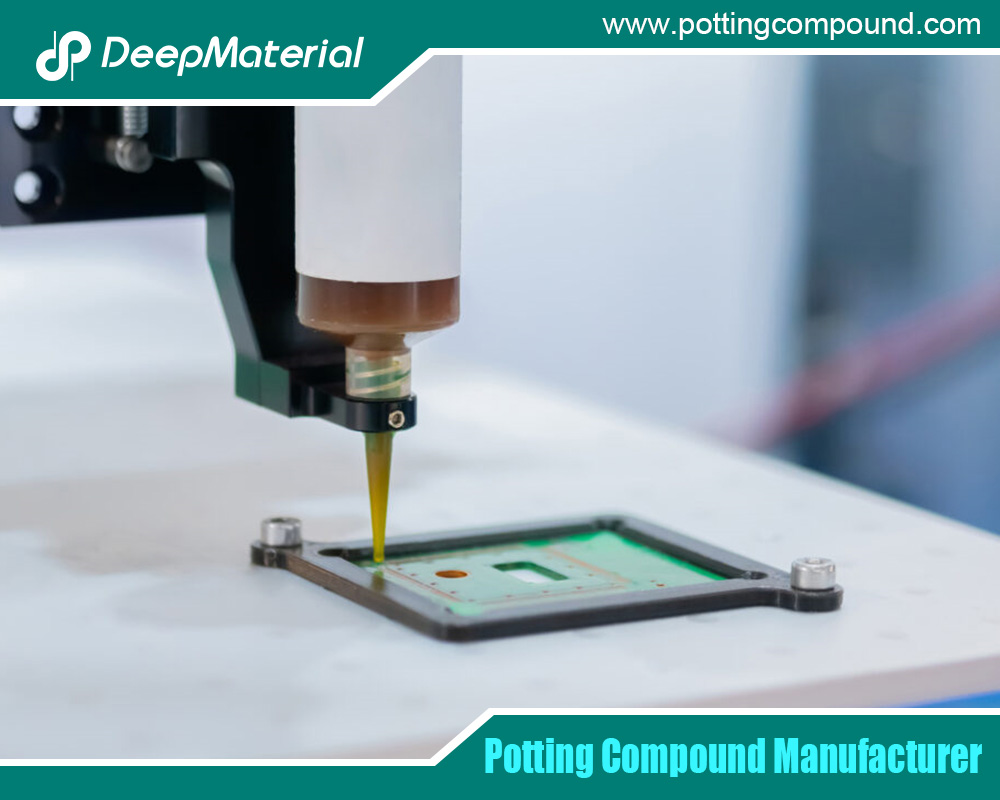
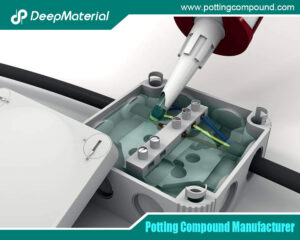
Potting, often referred to as encapsulation, is a more aggressive protection method. It involves placing the PCB assembly inside a mold or case (which is often the product’s housing itself) and filling the entire cavity with a liquid compound. This compound then cures to form a solid, heavy-bodied mass that completely envelops the electronics.
Unlike the thin “skin” of conformal coating, potting creates a solid block. There is no air inside the enclosure; the resin displaces all void space.
Common Types of Potting Compounds
-
Epoxy Resins: Provide excellent hardness, chemical resistance, and adhesion. However, they are rigid and can induce mechanical stress on components during thermal cycling.
-
Polyurethane Resins: Softer and more flexible than epoxies, offering better shock absorption and low-stress curing. They are a common choice for sensitive components.
-
Silicone Resins: Offer the widest temperature range and remain very soft. They provide the best thermal shock protection but are mechanically weaker and can be expensive.
Key Differences: A Technical Comparison
To determine which method suits your design, you must weigh the trade-offs in protection, physics, and lifecycle management.
1. Level of Environmental Protection
-
Conformal Coating: Provides a barrier against micro-environments. It stops ionic contaminants (like salts) from activating and prevents moisture film formation that could bridge traces. However, it is not hermetic. If submerged indefinitely, water vapor will eventually permeate the coating and reach the board.
-
Potting: Provides macro-environmental protection. Because the board is entombed in a solid block, it is effectively protected against physical ingress. It is ideal for continuous submersion (like in water pumps or marine sensors) and offers superior protection against corrosive gasses.
2. Thermal Management
-
Conformal Coating: Thin coatings are generally thermal insulators. While they may slightly inhibit heat dissipation, their thinness means that heat can still radiate from components effectively. Some modern coatings are specifically designed to be thermally conductive.
-
Potting: This has a dual effect. First, the bulk material acts as a heat sink, drawing heat away from components and distributing it throughout the block. Second, thermally conductive fillers (like ceramics) can be added to the resin to actively wick heat toward the enclosure walls. However, if the resin is a poor conductor, it can actually trap heat, causing components to overheat.
3. Mechanical Strength and Vibration
-
Conformal Coating: Offers minimal mechanical support. It protects the surface but does not prevent heavy components (like large capacitors or relays) from snapping off their solder joints under extreme vibration or shock.
-
Potting: Excels in high-vibration environments (aerospace, automotive). The solid mass supports every component, preventing lead movement and dampening resonance. It essentially turns the PCB assembly into a single, rigid block that can withstand massive G-forces.
4. Repairability and Rework
This is often the deciding factor for commercial products.
-
Conformal Coating: Designed for repairability. Coatings like Acrylic allow a technician to use a soldering iron tip to melt through the coating, replace a component, and then patch the area with a brush-on coating.
-
Potting: Rework is nearly impossible. To access a failed component, one must typically dig out the potting material, which risks damaging surrounding components or traces. In most cases, a potted assembly is considered non-repairable and must be discarded and replaced. The cost of the resin and the labor required to remove it usually exceeds the cost of a new board.
5. Weight and Form Factor
-
Conformal Coating: Adds negligible weight (grams) and does not change the physical profile of the board. It is ideal for compact, lightweight devices like wearables and drones.
-
Potting: Adds significant weight and volume. A potted assembly can weigh substantially more due to the density of the resin. It also requires a housing or mold, increasing the overall footprint.
When to Choose Conformal Coating
Conformal coating is the go-to solution for high-volume, consumer-grade, or mid-range industrial products where environmental threats are present but not extreme.
Ideal Applications:
-
Consumer Electronics: Smart home hubs, appliance control boards, and entertainment systems where humidity and dust are the main concerns.
-
Automotive Cabin Electronics: Infotainment systems, ECUs located inside the passenger compartment (which are subject to humidity but not splash fluids).
-
Telecommunications: Outdoor base stations that need protection from dew and condensation but must remain serviceable for upgrades.
-
Medical Devices: Non-implantable devices that require protection from bodily fluids but also need to be repaired or have components upgraded.
Why choose it? You need a cost-effective barrier that allows for manufacturing defects to be repaired later. It is a “protective skin” for boards that may need to live a long life with multiple service intervals.
When to Choose Potting
Potting is selected when failure is not an option, and the device is expected to survive in a hostile environment for years without maintenance.
Ideal Applications:
-
Automotive Under-Hood Components: Transmission control modules, ABS sensors, and fuel pump controllers exposed to aggressive fluids (oil, gasoline, coolant), salt spray, and extreme temperatures.
-
Aerospace and Defense: Avionics, guidance systems, and sonobuoys that must withstand rapid pressure changes, high G-force shocks, and saltwater submersion.
-
Renewable Energy: Solar panel junction boxes and wind turbine pitch controls, which are exposed to decades of UV rays, rain, and temperature swings.
-
Subsea and Downhole Equipment: Sensors and electronics used in oil drilling or oceanography, where pressures are immense.
Why choose it? You require absolute protection against physical stress and fluid ingress. The upfront cost is higher, and the product is essentially disposable, but the Mean Time Between Failures (MTBF) is dramatically increased in harsh environments.
The “Best of Both Worlds”: Selective Combination
In some high-reliability applications (like military or aerospace), engineers use a hybrid approach. They may apply a conformal coating to the PCB first to protect the sensitive component surfaces, and then pot the entire assembly.
The coating ensures that even if the potting compound shrinks away from a component during thermal cycling (a phenomenon called “fillet lifting”), the board surface still has a protective layer against corrosion. This dual-layer approach offers the mechanical stability of potting with the ionic barrier of conformal coating, though it significantly increases cost and complexity.
Decision Matrix: Which One is Right for You?
To make your final decision, ask yourself these four questions:
-
Will the device be submerged or constantly wet?
-
Yes: Potting is required.
-
No: Conformal coating is likely sufficient.
-
-
Does the device experience high vibration or shock?
-
Yes: Potting provides the necessary mechanical support.
-
No: Conformal coating can handle the vibration levels.
-
-
Does the device need to be repaired in the field?
-
Yes: Conformal coating (specifically Acrylic) is the only viable choice.
-
No: Potting is acceptable.
-
-
Is weight a critical constraint?
-
Yes: Conformal coating is the clear winner.
-
No: Potting can be considered.
-
Conclusion
Both conformal coating and potting are essential tools in the electronics designer’s arsenal, but they serve different purposes. Conformal coating is a preventative measure—a lightweight shield that protects against the atmosphere while maintaining serviceability. Potting is a protective armor—a definitive solution that sacrifices repairability for absolute durability.
By understanding the chemical, thermal, and mechanical demands of your target environment, you can select the method that ensures your PCB survives its intended lifespan without over-engineering (and over-spending) on protection.
For more about conformal coating vs. potting: what’s the difference for your PCB, you can pay a visit to DeepMaterial at https://www.pottingcompound.com/ for more info.