
Phone: +86-133 5263 6504
Phone: +86-133 5263 6504
How Does Epoxy Encapsulated LED Work?
The Transparent Guardian of Light
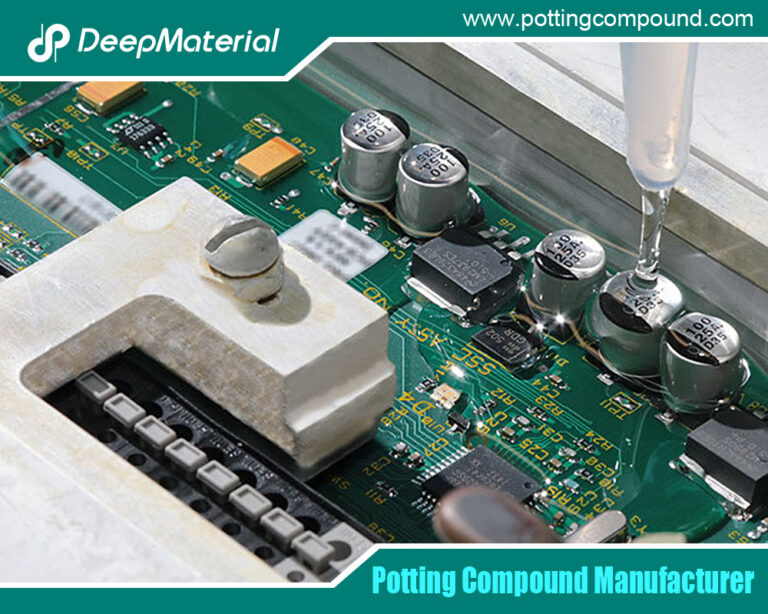
In a world illuminated by Light Emitting Diodes (LEDs)—from the subtle indicator on your coffee maker to the brilliant pixels of a stadium jumbotron—a critical component remains largely invisible to the end user. It is not the semiconductor chip itself, nor the gold wire bond, but the transparent dome that encases it. For decades, the dominant technology for protecting standard LEDs has been epoxy resin encapsulation. This process is a masterful interplay of materials science, optics, and electrical engineering, transforming a fragile semiconductor junction into a durable, efficient, and long-lasting light source. Understanding how epoxy encapsulation led works reveals why this technology became the backbone of the LED revolution and continues to hold significant relevance in today’s lighting landscape.
The Core Challenge: Protecting a Delicate Emitter
At its heart, an LED is a simple solid-state device. When current flows through a specially crafted semiconductor chip (the die), electrons and electron holes recombine, releasing energy in the form of photons—light.
However, this bare die is exceptionally vulnerable:
- Physical Damage: It is a tiny, brittle crystal that can be crushed, scratched, or cracked.
- Environmental Attack: Moisture, dust, and atmospheric pollutants can corrode the metallic contacts and degrade the semiconductor materials.
- Heat: While LEDs are efficient, the die still generates heat at the junction. If not managed, excessive heat drastically shortens the LED’s lifespan (a principle known as “thermal degradation”).
- Photon Escape: The semiconductor material has a very high refractive index. This means that much of the generated light, striking the internal boundaries at too steep an angle, would simply reflect back into the chip and be re-absorbed (a phenomenon called “total internal reflection”), severely reducing light output.
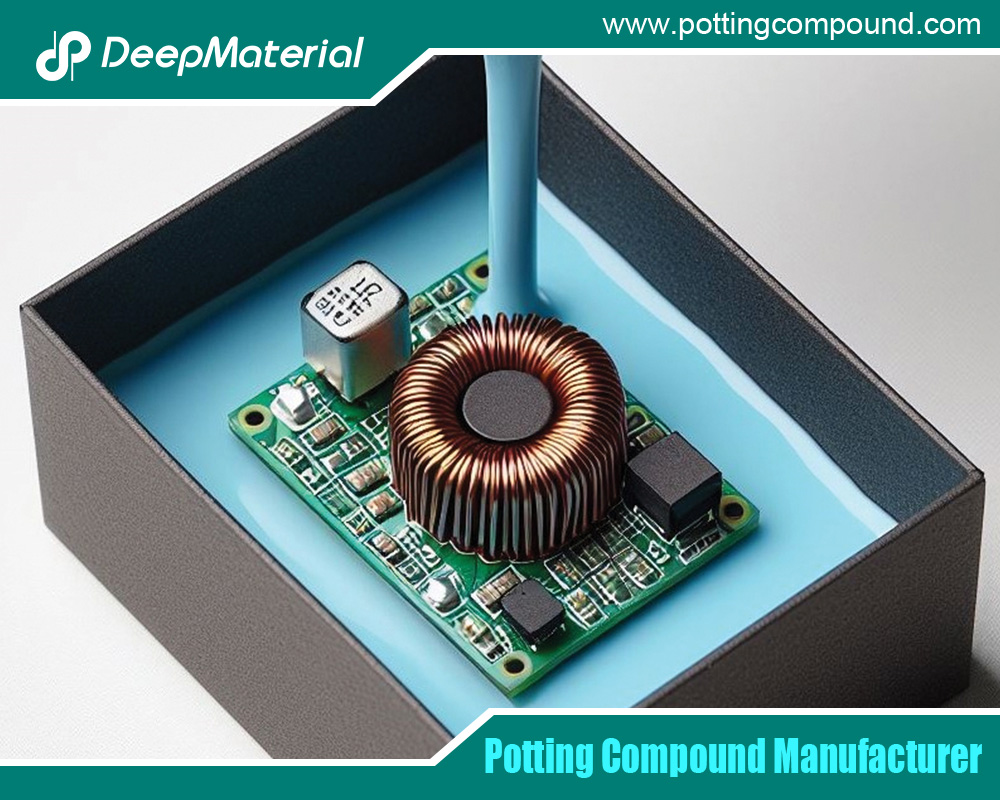
The epoxy encapsulant is the engineered solution to all these challenges simultaneously. It is not merely a “glob of plastic”; it is a precision optical and protective component.
Anatomy of an Epoxy Encapsulated LED
A standard through-hole LED (like the classic 5mm round type) demonstrates the system perfectly:
- The Leadframe: This is the metal skeleton, usually copper or alloy, comprising the anode and cathode posts. It provides structural support and electrical connection.
- The LED Die: The microscopic semiconductor chip is mounted (epoxied or soldered) onto a reflective cup within one of the leadframe posts.
- The Wire Bond: A fine gold wire connects the top contact of the die to the other leadframe post, completing the electrical circuit.
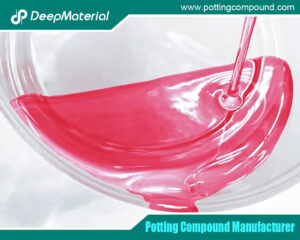
- The Epoxy Encapsulant: The liquid resin that is molded or dispensed over the entire assembly and then cured into a solid, transparent dome.
The Encapsulation Process: From Liquid to Lens
The functionality of the epoxy is defined by its application and curing process.
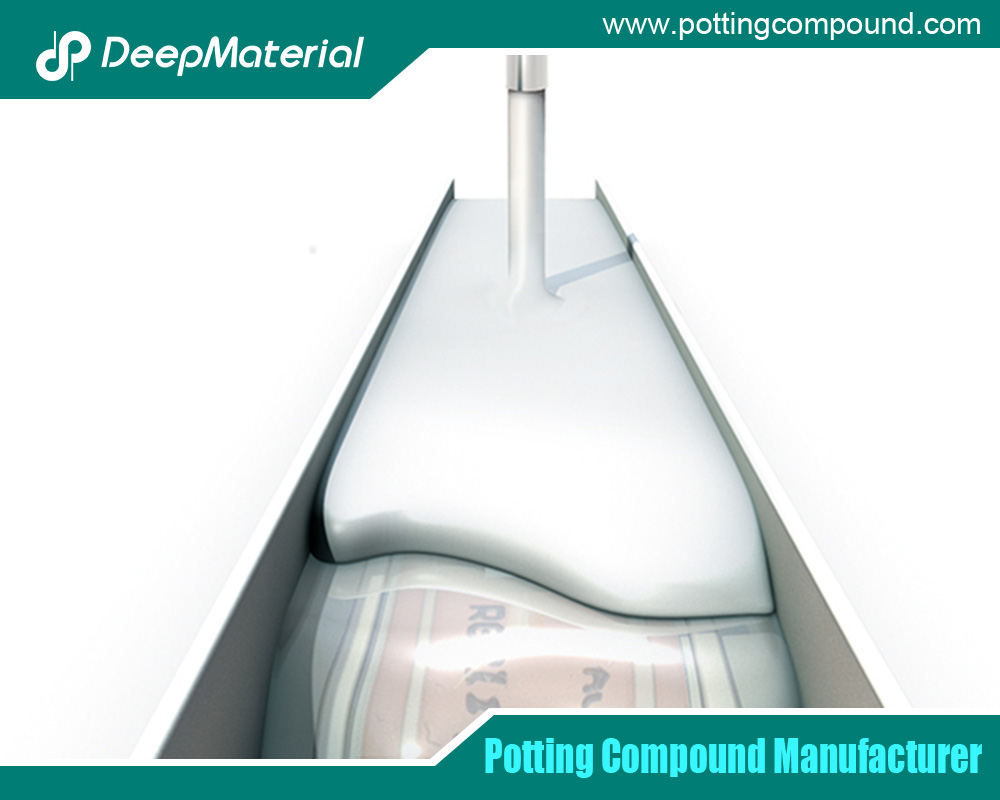
- Mixing and Preparation: The epoxy resin is a two-part thermoset polymer, consisting of a resin and a hardener. These are precisely mixed, often under vacuum to remove air bubbles that would become optical defects. At this stage, critical additives are incorporated:
- Dispersed Phosphors: For white LEDs. Blue light from the die excites yellow-emitting phosphors suspended in the epoxy, creating white light through photoluminescence.
- Diffusers: Tiny particles to scatter light and create a wider, more even viewing angle.
- Stabilizers: To protect against UV degradation (from sunlight or the LED’s own emission) and thermal yellowing.
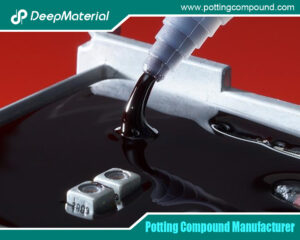
- Dispensing or Molding: The mixed liquid epoxy is carefully injected into a mold containing the leadframe with the attached die. The mold defines the final shape of the lens—round, rectangular, or flat-top.
- Thermal Curing: The assembly is heated in a precisely controlled oven. This heat catalyzes an irreversible chemical reaction (cross-linking), transforming the viscous liquid into a rigid, durable solid. This thermoset property is key—it won’t re-melt under later heat.
The Multifaceted Role of the Epoxy: More Than Just a Cover
Once cured, the epoxy performs several non-negotiable functions:
- Primary Physical and Environmental Protection
The hardened epoxy forms a hermetic-like seal around the die and wire bonds. It acts as a robust barrier against:
- Mechanical Stress: Absorbing minor impacts and vibrations that would otherwise fracture the die or break the hair-thin gold wire.
- Moisture and Contaminants: Preventing the ingress of humidity and corrosive gases, which are primary causes of early LED failure (e.g., “black lead corrosion”).
- Optical Engineering: Shaping the Light
This is where the epoxy truly becomes an active optical element.
- Refractive Index Matching: The epoxy’s refractive index (typically ~1.5) is lower than the semiconductor’s (~3.0) but much closer than air (1.0). This intermediate step reduces total internal reflection at the die surface. More photons escape the chip into the epoxy dome, dramatically increasing light extraction efficiency.
- Lens Design: The dome shape is engineered as a primary lens. It collects the wide-angle light emitted from the die and focuses or collimates it into the desired beam pattern. The shape of the epoxy—a sphere, a cylinder, or a focused parabola—directly determines the LED’s viewing angle.
- Phosphor Host: For white LEDs, the epoxy is the matrix that holds and evenly disperses the phosphor particles. The uniformity and thickness of this phosphor-loaded layer are critical for achieving consistent color temperature and avoiding blue/yellow separation (the “yellow ring” effect).
- Thermal Management Facilitator
While epoxy is a thermal insulator compared to metals, it still plays a vital thermal role. It conducts heat away from the die and wire bond towards the larger mass of the leadframe, which then dissipates it into the circuit board and environment. Specialized, thermally conductive epoxy formulations with ceramic or other fillers are used for high-power LEDs to enhance this function.
The Material Science: Formulating for Performance
The specific formulation of an epoxy encapsulant is a high-stakes compromise:
- Clarity & Transmission: Must be optically pristine to minimize light absorption.
- Thermal Stability: Must resist yellowing and cracking at the LED’s operating temperature (typically 85°C-125°C).
- Thermo-Mechanical Properties: Its Coefficient of Thermal Expansion (CTE) must be matched as closely as possible to the leadframe and die materials to avoid shear stress during temperature cycles, which can break wire bonds or delaminate the die.
- Adhesion: Must bond tenaciously to the metal leadframe and the die surface to prevent moisture from creeping along the interfaces.
- UV Stability: Must resist browning and becoming brittle when exposed to ultraviolet light, either from the environment or from the blue/UV pump LED itself.
Challenges and Limitations of Epoxy Encapsulation LED
Despite its success, epoxy has inherent limitations that have defined its application scope:
- High-Temperature Vulnerability: Standard epoxies begin to degrade, darken, and lose transparency when consistently exposed to junction temperatures above ~120°C. This makes them unsuitable for very high-power LEDs.
- UV Degradation: Prolonged exposure to short-wavelength light can cause photochemical breakdown, leading to yellowing and loss of light output—a significant issue for bright blue and white LEDs.
- Moisture Permeability: While protective, epoxy is not a perfect moisture barrier, especially in thin sections. This can be a reliability concern in very humid environments.
The Silicone Revolution and Epoxy’s Enduring Niche
These challenges led to the rise of silicone as an encapsulant for high-power, high-brightness, and high-reliability LEDs (like automotive headlights and architectural lighting). Silicones offer superior high-temperature stability (withstanding over 150°C) and exceptional UV resistance.
However, epoxy encapsulation is far from obsolete. Its advantages ensure it remains the dominant choice for vast categories of LEDs:
- Cost-Effectiveness: Epoxy resins are significantly less expensive than optical-grade silicones.
- Mechanical Rigidity and Processability: The hard, rigid dome protects against physical handling damage better than soft silicones and is ideal for automated insertion into PCBs.
- Perfect for Low-to-Medium Power: For indicator lights, consumer electronics, signage, and many domestic lighting applications where temperatures are managed, epoxy provides the perfect balance of performance, durability, and cost.
- Excellent Adhesion and Hermeticity: Often superior to silicone for creating a strong seal on traditional leadframes.
Conclusion
Epoxy encapsulation is a foundational technology that enabled the LED to transition from a laboratory curiosity to a ubiquitous global commodity. By solving the concurrent problems of protection, light extraction, and beam shaping in one elegant, mass-producible package, it allowed LEDs to be reliable, efficient, and affordable. While advanced applications have migrated to silicones and other hybrid materials, the principles established by epoxy encapsulation remain central to LED design. The next time you glance at a glowing red power indicator or a backlit button, remember the complex chemistry and precise engineering encased within that tiny, durable dome—the transparent guardian that makes the miracle of solid-state light a practical, everyday reality. It stands as a testament to how a seemingly simple material, when expertly formulated and applied, can play a starring role in a technological revolution.
For more about how does epoxy encapsulated LED work, you can pay a visit to DeepMaterial at https://www.pottingcompound.com/ for more info.